
Summary
Capillary tubes, the argon tradeoff, and what Marvin and Weather Shield require above 5,000 feet. A practical spec checklist for Colorado's high country.
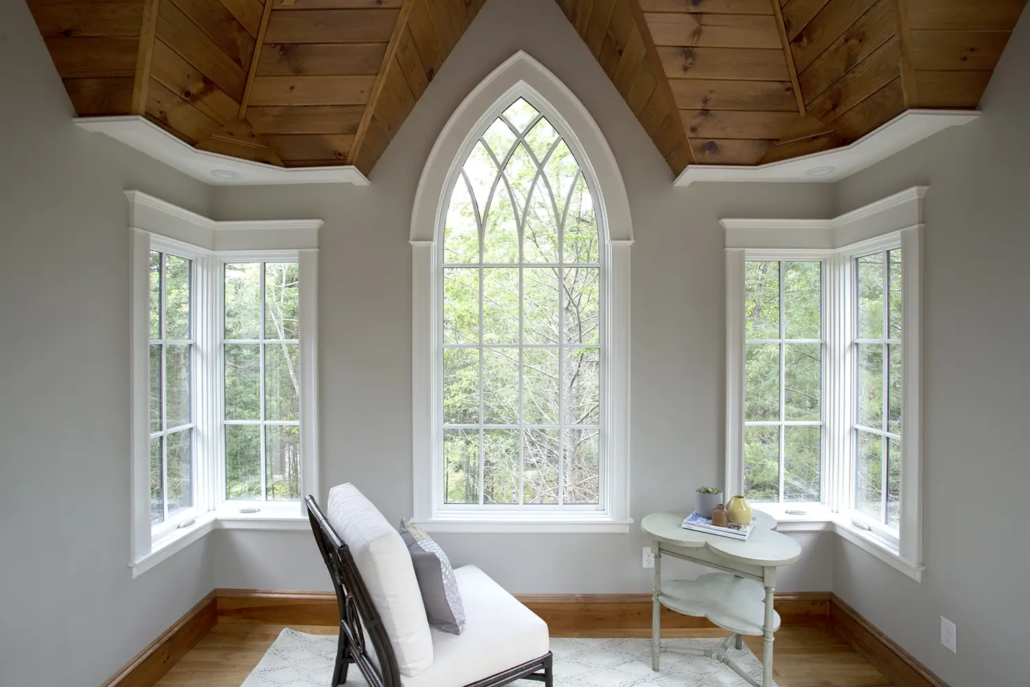
In Part 1, we covered why altitude destroys sealed windows: pressure differentials bow the glass, stretch the seals, and eventually cause fogging, distortion, or breakage. Now we cover how to spec it right so none of that happens.
The central point: altitude glass is a factory decision, made at order time. It cannot be fixed in the field after delivery.
Key Takeaways
- Altitude glass is a factory decision: it is made at order time and cannot be fixed in the field after delivery.
- Tubes equalize pressure: capillary and breather tubes let the airspace “breathe”; any elevation change over about 2,000 ft between factory and jobsite calls for pressure management.
- The argon tradeoff: a tube that lets air move cannot also trap argon. Factory pre-equalized units can preserve the gas fill.
- Marvin and Weather Shield: Marvin does not warrant glass without capillary tubes above 5,000 ft; Weather Shield offers a dedicated High Altitude Glass option.
- Know your elevation: flag anything above 5,000 ft; above 7,000 ft, treat altitude glass as mandatory.
Capillary Tubes and Breather Tubes, Explained
The industry’s standard answer is a tiny tube through the spacer that lets the airspace “breathe,” equalizing pressure between the inside of the unit and the outside air as elevation changes. The terms get used interchangeably, but there’s a useful distinction:
Breather Tubes
Installed for shipment and equalization, then sealed once the unit reaches its installation elevation, typically after about 24 hours of acclimation with the unit vertical and the tube at the top.
Capillary Tubes
Much thinner (around 0.021″ inside diameter) and longer. Because gas moves through them so slowly, some manufacturers allow them to remain open; others require sealing at install by snipping the tube and capping it with silicone.
Either way, the critical rules are the same: the tube stays at the top of the unit during transit and installation, the unit needs time to acclimate before sealing, and you never crimp, remove, or modify a tube unless the manufacturer specifically instructs it, because doing so can destroy the unit and void the warranty. The industry rule of thumb: any elevation change greater than about 2,000 feet between factory and jobsite calls for pressure management.
The Argon Tradeoff No One Mentions
Here’s the catch with tubes: a passage that lets air move for pressure equalization can’t simultaneously trap argon inside. An open or breathing tube means the insulating gas escapes. You’re effectively getting an air-filled unit.
At moderate elevations this may be a non-issue. But at 8,000–9,000+ feet, where tubes are doing the most work, argon retention and pressure equalization are fundamentally in tension. The alternative is a factory pre-equalized unit, sealed at the factory for the destination elevation, which can preserve the gas fill. It costs more and requires knowing the exact project elevation at order time, but for high-performance mountain builds it’s the right call. This is a genuine spec decision with real thermal consequences, and it should be made deliberately, not discovered after the glass is on the truck.
What the Manufacturers Require
Marvin
Marvin publishes a High Altitude Limited Warranty Supplement with formal Capillary Tube Usage Guidelines. The headline: glass without capillary tubes installed above 5,000 feet is not warranted (for products outside the guidelines), and Marvin directs dealers to consult on any installation above that line. Marvin’s own technical guidance also confirms that units with capillary tubes cannot retain argon gas. As an authorized Marvin dealer, we spec every mountain project against these guidelines before ordering.
Weather Shield
Weather Shield offers a dedicated High Altitude Glass option across its product lines. We’ve specified it on projects as high as Breckenridge (9,600 ft), including casements, direct-set pictures, and custom geometric shapes. It’s a factory-engineered solution, not a field workaround.
How to Spec Windows for Colorado Elevations: A Checklist
1. Know the Elevation
Know the project elevation before ordering. The specific lot is needed. A “Denver” project at 5,280 ft and an “Evergreen” project at 7,200 ft are different specs.
2. Flag Anything Above 5,000 Feet
Flag it for altitude-specific glass with your dealer. Above 7,000 feet, treat it as mandatory, not optional.
3. Decide the Argon Question
Decide it deliberately. Tubes or gas fill: pick based on elevation and performance targets, and consider factory pre-equalized units for high-performance builds.
4. Confirm the Tube Procedure
Confirm it with your installer. Acclimation time, tube orientation, sealing method: per the manufacturer’s instructions, not field improvisation.
5. Read the Warranty
Read the warranty before you buy. Ask specifically: is this glass warranted at my project elevation? Get the answer in writing.
6. Consider Tempered Glass
Consider tempered glass for large units. Big glass at big elevation is where breakage risk concentrates.
7. Use a Dealer Who Does This Routinely
Altitude spec’ing is order-time engineering. If your supplier can’t explain capillary tubes, find one who can.
Missed Part 1? Why windows fail at altitude →
Get It Spec’d Right the First Time
We’ve been engineering windows for Colorado elevations since 1952. Send us your plans and the project elevation; we’ll review the drawings and spec the glass package correctly before anything gets ordered. Ask us about free blueprint takeoffs for your next project.
Prefer to talk it through? Call us at (303) 296-9955 or toll-free at 1-800-525-6193.
Spec’ing Windows for High Altitude: FAQ
Can I get argon-filled windows for a mountain home?
Sometimes. At moderate elevations, properly equalized units may retain gas. At extreme elevations, traditional capillary tubes typically preclude argon retention, but factory pre-equalized units sealed for the destination elevation can preserve it. It’s a spec decision to make with your dealer.
Who handles the altitude spec: the architect, the builder, or the window dealer?
The dealer should. Altitude glass is ordered from the factory to a specific configuration; it can’t be corrected on site. Send your dealer the project elevation with the plans and let them engineer the glass package.
At what elevation do I need altitude-specific glass?
Flag anything above 5,000 feet for altitude-specific glass with your dealer. Above 7,000 feet, treat it as mandatory, not optional. The industry rule of thumb is that any elevation change greater than about 2,000 feet between factory and jobsite calls for pressure management.
What is the difference between breather tubes and capillary tubes?
Breather tubes are installed for shipment and equalization, then sealed once the unit reaches its installation elevation. Capillary tubes are much thinner and longer; some manufacturers allow them to remain open, while others require sealing at install. Never crimp, remove, or modify a tube unless the manufacturer specifically instructs it.
Can altitude glass be fixed after the windows are delivered?
No. Altitude glass is a factory decision, made at order time. It cannot be fixed in the field after delivery, which is why the project elevation needs to be known before anything is ordered.
What does Marvin require for high-altitude installations?
Marvin’s High Altitude Limited Warranty Supplement states that glass without capillary tubes installed above 5,000 feet is not warranted (for products outside the guidelines), and Marvin directs dealers to consult on any installation above that line.


Leave a Reply
Want to join the discussion?Feel free to contribute!