
Summary
Windows built for sea level can fog, bow, or crack in Colorado's mountains. Learn how altitude pressure damages sealed glass, from Denver at 5,280 ft to 9,000+ ft.
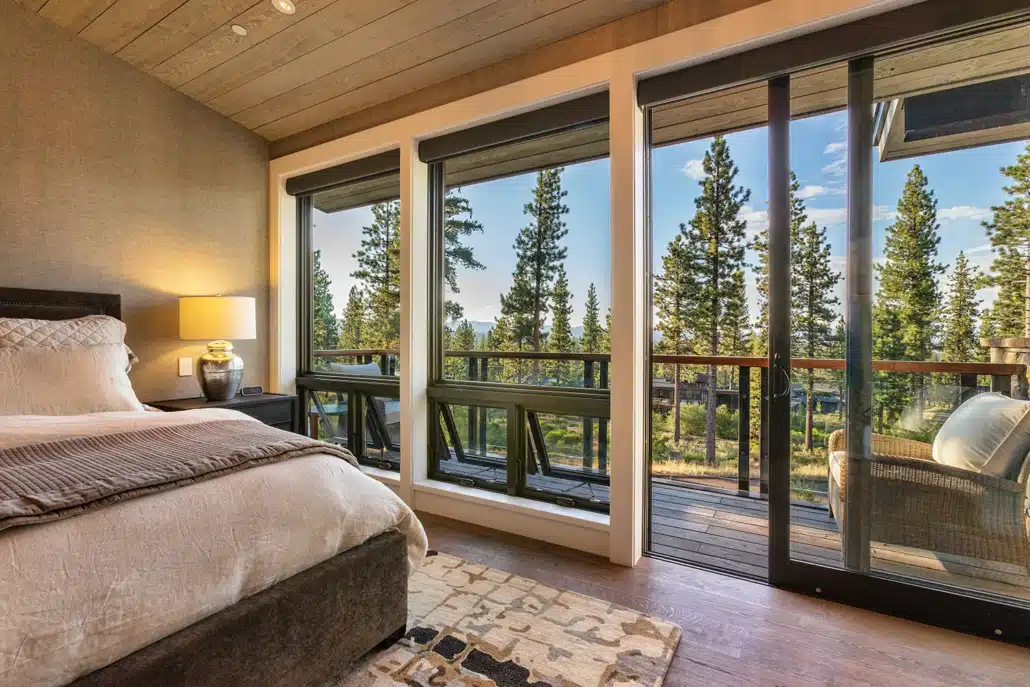
A window that performs flawlessly in Houston, Texas can fog, bow, or crack within a few seasons in Breckenridge, Colorado. Colorado builds span from 5,280 feet in Denver to 9,000+ feet in the high country, and every one of those feet changes the air pressure pushing on a sealed window. Spec the glass wrong and you’re buying callbacks, warranty fights, and unhappy clients.
Here’s what’s happening inside the glass.
Key Takeaways
- Sea-level glass, mountain pressure: a sealed window made at factory elevation and installed at 5,280 ft or higher arrives with its airspace pressurized above the thinner outside air.
- The force is real: atmospheric pressure drops about 1 psi per 2,000 ft, which puts over a thousand pounds of additional force on each pane of a standard 2’ x 4’ unit for every 2,000 ft gained.
- Three failure modes: seal failure and fogging, glass deflection and distortion, and glass breakage.
- A foggy window is a dead window: once the seal breaches, the unit needs replacement.
- It is preventable: but the fix happens at order time. Part 2 covers how.
What Altitude Does to a Sealed Window
An insulating glass unit (IGU) is two or three panes of glass sealed around a spacer, trapping air or argon between them. That seal is made at the factory in Minnesota or Wisconsin, at the factory’s elevation, at that day’s barometric pressure.
Atmospheric pressure drops about 1 psi for every 2,000 feet of elevation gain. A window manufactured near sea level and installed in Denver (5,280 ft) arrives with its internal airspace pressurized roughly 2.5 psi above the thin outside air. On a standard 2’ x 4’ unit, a 2,000-foot elevation gain alone puts over a thousand pounds of additional force on each pane of glass.
Pressure Pushes Outward
The trapped air pushes outward. The glass bows and the seals stretch. The wider the elevation gap between factory and jobsite, or the larger the glass, the worse it gets.
Weather Stacks On Top
Temperature swings and storm-driven barometric changes add to the effect of elevation. A swing of 18°F has roughly the same effect as 1,000 feet of elevation change.
The Three Ways Altitude Kills Windows
1. Seal Failure and Fogging
Constant outward pressure stretches the edge seal until it gives way. Once the seal breaches, moist outside air enters, the desiccant saturates, and condensation forms between the panes. That foggy window isn’t dirty. It’s dead, and the unit needs replacement.
2. Deflection and Distortion
Before seals fail, the panes bow outward (convex) under the pressure differential. Viewed at an angle, reflections ripple and distort. It’s most visible and most destructive on large picture windows and the long, narrow units architects love in mountain homes. Thicker glass deflects less but transfers more stress to the seals; tempered glass resists breakage far better than annealed.
3. Glass Breakage
In extreme cases, big units and large elevation jumps, the stress exceeds what the glass or seal can take. The unit cracks or the seal blows out entirely, sometimes in transit before it ever reaches the jobsite.
What to Do About It
The good news: every one of these failures is preventable, but the fix happens at order time. In Part 2, we cover capillary and breather tubes, the argon tradeoff nobody mentions, what Marvin and Weather Shield require at elevation, and a spec checklist for Colorado projects.
Get Your Windows Spec’d for Your Elevation
Whether you’re a builder planning a mountain project or a homeowner replacing windows above 5,000 feet, the right glass package starts with a conversation. Certified Home Services has been serving Colorado since 1952. Tell us your project elevation and we’ll help you get it right before anything is ordered.
Prefer to talk it through? Call us at (303) 296-9955 or toll-free at 1-800-525-6193.
Windows at Altitude: FAQ
Do I need special windows for Denver at 5,280 feet?
Often yes. It depends on where the glass was manufactured. Most of our windows come from Minnesota and Wisconsin. Glass made near sea level and installed in Denver faces a ~2.5 psi differential. Most quality manufacturers have altitude guidelines that kick in around 5,000 feet, so Denver sits right on the line where spec’ing matters.
Will my windows bow visibly at altitude?
They can. Outward bowing (convex deflection) is the direct result of higher internal pressure pushing against thinner outside air. It’s most noticeable on large units viewed at an angle, and it’s a warning sign of seal stress, not just a cosmetic issue.
What happens if I install standard windows at 9,000 feet?
Expect some combination of visible bowing, premature seal failure and fogging, and in severe cases glass breakage, plus a voided manufacturer warranty. The failure may take seasons to show up, which is why it gets missed at final walkthrough.
Why do my windows have fog between the panes?
Constant outward pressure can stretch the edge seal until it gives way. Once the seal breaches, moist outside air enters, the desiccant saturates, and condensation forms between the panes. That fog isn’t dirt on the glass. The unit is dead and needs replacement.
Is elevation the only thing that stresses sealed glass?
No. Temperature swings and storm-driven barometric changes stack on top of elevation. A swing of 18°F has roughly the same effect as 1,000 feet of elevation change. Larger glass makes all of it worse.
Can altitude problems be prevented?
Yes, but the fix happens at order time. Part 2 of this series covers how to spec windows for high altitude.


Leave a Reply
Want to join the discussion?Feel free to contribute!